TWO:With the same want of sagacity which was driving Ministers and Parliament to the loss of America, they were still persecuting Wilkes into popularity. On the 14th of November, 1768, Sir Joseph Mawby, member for Southwark, presented a petition from Wilkes, reciting all the proceedings of Government against him, and praying for his being heard at the bar of the House. Wilkes appeared before the House on the 31st of January, where he took exception to the word "blasphemous" as applied to the "Essay on Woman." Thurlow, afterwards Lord Chancellor, a most swearing, blaspheming man, protested that if the House did not declare it blasphemous, it would be a disgrace to it. However, the words "impious" and "obscene" were substituted. On the 1st of February the House determined that his petition was frivolous. The next day the House went into another charge against Wilkes. In the preceding April Lord Weymouth, previous to the riots in St. George's Fields, had issued a letter, as Secretary of State, to the magistrates of Lambeth, warning them of the danger of riots taking place in the endeavour to free Wilkes from prison, and offering them the aid of the military. Wilkes, while in the King's Bench, had obtained a copy of this letter, and sent it to the St. James's Chronicle with his own comments, styling it a "hellish project," and as the direct cause of that "horrid massacre." Weymouth complained to the House of Lords that this was a breach of privilege. A conference was had with the Commons; Wilkes was brought to the Bar, where Baldwin, the printer, had acknowledged the letter to be his, and then, so far from denying it, claimed the thanks of the country for having exposed that "bloody scroll." The Commons decided that he was guilty of an insolent and seditious libel, and on the following day, February 3rd, on the motion of Lord Barrington, he was expelled the House, by a majority of two hundred and nineteen to one hundred and thirty-seven. The king had directly asked for such a verdict by a letter to Lord North, declaring that Wilkes's expulsion was "highly expedient and must be effected."In Ireland, the influence of the free notions of France was already become broadly manifest, and though it resulted in no unconstitutional act, it wonderfully invigorated the resentment of the Irish against corruptions of Government. These truly demanded reprehension and reform; but the Government of Pitt was strong, and set both Ireland and reform at defiance. The Marquis of Buckingham, the Lord-Lieutenant, was recalled, because he had not been able to repress the movement in the Irish Parliament on the Regency question. The Earl of Westmoreland was sent in his place; but the Parliament still showed its resentment as strongly as ever, and proceeded to delve vigorously into the sink of Government corruption, and demand numerous corrections of abuses. Direct motions on the subject were made in both Houses; in the Peers by Lord Portarlington, in the Commons by Grattan, and, in truth, the ministerial abuses of the Irish Government were disgraceful. Grattan, on the 1st of February, pointed out the increased number of commissioners of revenue, and moved that his Majesty be addressed to inquire by whose advice this had been done. Next the increase of the Pension List came under discussion; then the granting of no less than fourteen Government offices to members of the Irish Commons. Lastly was noticed the paltry withdrawal of Lord Strangford's pension of four hundred pounds, which had been granted him at the request of the Irish House of Lords, in consequence of his small income, because he had voted against Ministers on the Regency Bill, at the same time that numbers of men who were[373] not Irishmen, and had never done anything for Ireland or any other country, were saddled on the Irish revenue in a variety of sinecure posts and pensions. All these motions, however, were rejected by large Ministerial majorities.
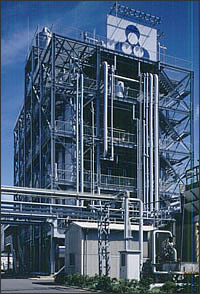
Since establishment, our company has been manufacturing and delivering various types of chemical machinery. In particular, we have been a trailblazer in the growth and development of alcohol distillation technology in Japan and over more than 80 years, we have delivered numerous distillation plant.
Our sophisticated products, developed on the back of deep experience and extensive skills honed over those years, continue to be rated very highly by our clients.
Delivery Record: Distillation plant / Major alcoholic beverage company
We delivered a beverage alcohol distillation plant with one of the largest capability in Japan. This plant integrates our all-out effort and the latest technologies, having a breakthrough process capable of quality improvement, energy saving and automatization (full automated using distributed control system). Our single-source-responsibility from design and manufacturing to on-site construction and commissioning achieved successful completion as originally planned and has led to the stable operation to the present. With the experience of leading the industry as a top manufacturer of distillation plant in Japan, we will meet the needs and expectations of our clients, and sincerely hope to contribute to our clients who require our help.
